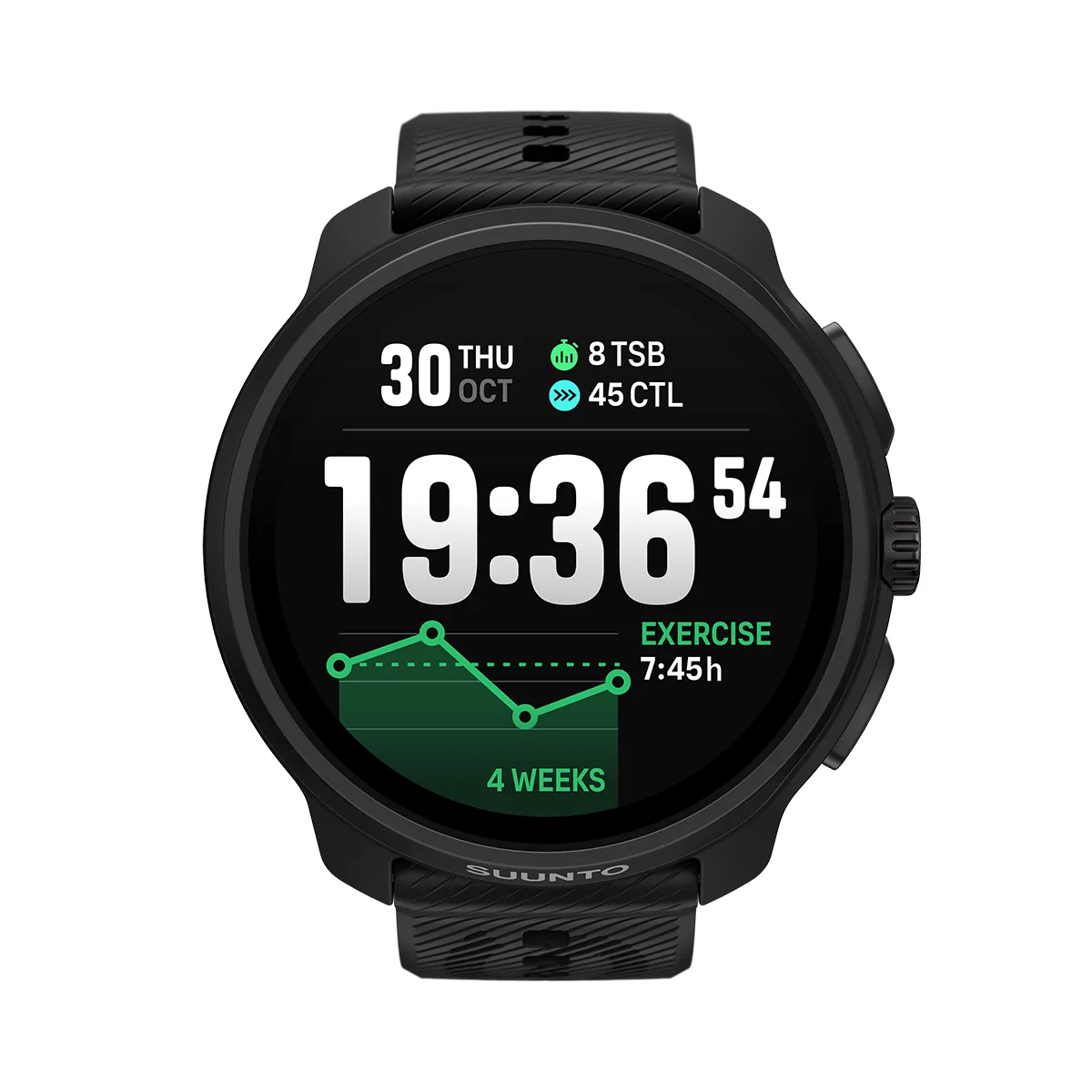
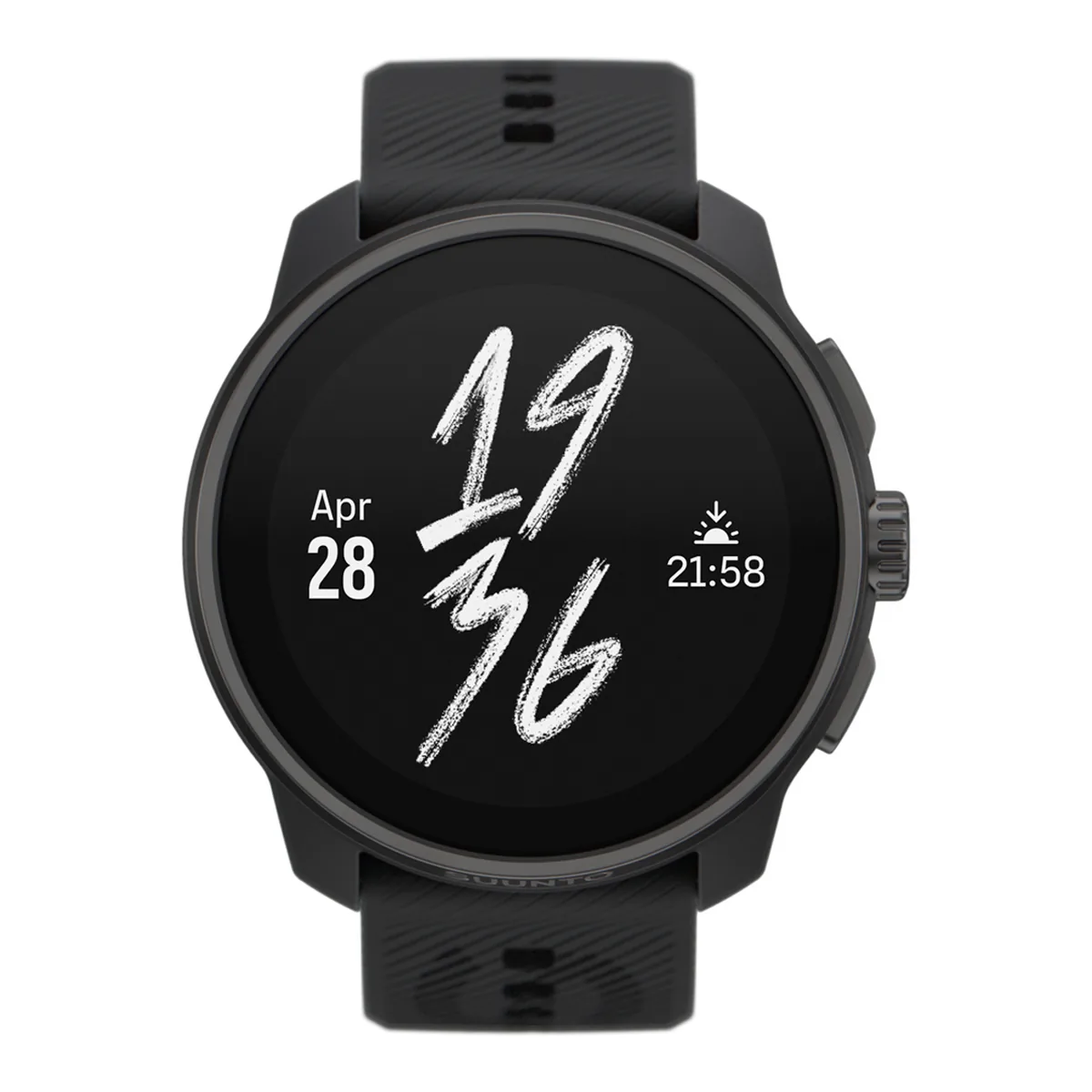
Suunto Race 2 smartwatchMultisport~$499

Suunto

Suunto Race 2

Android; iPhone with limits

Suunto describes Race 2 as slimmer and lighter than the original Race, with a larger, brighter 1.5-inch LTPO AMOLED and a redesigned back panel for wrist heart rate. Its battery runs to 55 hours of multi-band GPS and 18 days of daily use. A sapphire crystal comes standard on the steel model, with titanium versions above it.

Approx. price

~$499

maker's list price, not a live price

Battery, smartwatch mode

18 days

the maker's headline

Battery, always-on display

not published

the maker gives no figure

Battery, GPS workout

65 h

maker's figure

Works with

Android; iPhone with limits

see the limits below

Weight

76 g

Suunto spec weight, stainless steel version (Suunto does not say whether the strap is included)

Best for: Triathletes and trail runners who want a large AMOLED screen and multi-day GPS battery

Battery: the claim and the other two figures

Claimed (smartwatch mode)
18 days
With always-on display
not published
GPS workout
65 h
  • Headline: Suunto: Daily use up to 18 days, daily heart rate on, display wakes on wrist-raise.
  • GPS: Suunto spec: All-Systems GNSS mode + Single-Band: up to 65h.
  • Dual-band GPS: 55 h.
  • Multi-band Performance mode up to 55h; Tour mode up to 200h with lower GPS accuracy and heart rate off. Suunto publishes no AOD figure.

The ring’s outer track is the headline claim; the inner two are the always-on and GPS figures as a share of it. An empty track means Suunto does not publish that figure. Why the figures differ

Phones, paid tier and updates

iPhone:
Yes, with limits.
Android:
Yes.
Suunto spec: 'Send predefined replies to incoming messages from watch: Android only'; notifications work on both.
Paid tier:
No paid tier sold by the maker.
Software updates:
Suunto does not publish a guaranteed number of update years for this model.

Cleared health features

Suunto cites no regulator clearance for a health feature on this model. Its heart-rate, sleep and blood-oxygen readings are wellness features.

A clearance says what a feature is allowed to claim, not that it replaces a doctor. Cleared versus wellness features

What the extra money buys: Against the Suunto Race S, the extra ~$150 buys 25 h more GPS time and a longer headline battery (18 days vs 9 days). See the Suunto Race S.

Specifications

Approx. price
~$499 (Race 2 stainless steel, $499.00 on suunto.com; titanium versions $599.00)
Type
Multisport
Platform
Suunto
Weight
49 mm: 76 g (Suunto spec weight, stainless steel version (Suunto does not say whether the strap is included))
Battery, smartwatch mode
18 days (Suunto: Daily use up to 18 days, daily heart rate on, display wakes on wrist-raise)
Battery, always-on display
Not published by the maker
Battery, GPS workout
65 h (Suunto spec: All-Systems GNSS mode + Single-Band: up to 65h)
Battery note
Multi-band Performance mode up to 55h; Tour mode up to 200h with lower GPS accuracy and heart rate off. Suunto publishes no AOD figure.
Works with
Android; iPhone with limits
iPhone
Yes, with limits
Phone limits
Suunto spec: 'Send predefined replies to incoming messages from watch: Android only'; notifications work on both.
Paid tier
No paid tier sold by the maker
Update years
Not published by the maker
Cleared health features
None the maker cites
Display
AMOLED
Maps
Downloadable maps, no topo (Suunto: free offline maps downloaded to the watch, with heatmaps and Climb Guidance; the page does not say the on-watch maps carry topographic contours; 32GB outdoor offline map storage)
LTE
No LTE version
Case
glass-fibre reinforced polyamide, stainless steel bezel

Features, per Suunto

  • 1.5-inch 466 x 466 LTPO AMOLED, sapphire crystal
  • 115+ sport modes, Suunto ZoneSense and Suunto Coach
  • Dual-band GNSS, 32GB of offline maps, Climb Guidance and heatmaps
  • 100 m water resistance; freedive depth meter to 10 m
  • Stainless steel or titanium bezel

Where the specs put it ahead

  • 55 hours of multi-band GPS, more than twice the Run 2's 24
  • Sapphire crystal and a 100 m rating on the base steel model
  • Up to 200 hours in Tour mode covers multi-day events
  • Free offline maps with Climb Guidance for trail races

What it gives up

  • No onboard music storage, only music controls
  • Message replies from the watch work on Android only
  • Suunto lists 76 g for the steel model, against 53 g for the Run 2 on its silicone strap

The two lists above are drawn from the maker’s own pages and prices, not from owner reports. Where owner discussion has been read it appears in its own section below, so the two are never mistaken for each other.

What owners say

From what 28 owners of the Suunto Race 2 reported between July and October 2026. Earlier generations are not counted.

Race 2 owners like the hardware. They describe a bright screen, a sapphire face that resists marks, good battery in day-to-day training, and offline maps that several of them rate above Garmin's. Hikers in particular report that navigation and Climb Guidance just work.

The firmware is the problem. Reboots during workouts, intervals and races come up again and again, sometimes appearing after an update and sometimes on a new watch. A few owners rolled firmware back to get a stable watch, and at least two returned theirs. Wrist heart rate that takes 10 to 20 minutes to settle, pool swims that save short, and a screen that will not turn off in rain or with navigation running are the other repeat issues.

If you mostly hike and navigate, or want a long-lasting AMOLED watch for steady training, owners are largely happy. If you run structured intervals, race long distances or rely on wrist heart rate from the first minute, check that the latest firmware has settled before buying, and plan on a chest strap.
What owners like

  • Battery holds up well in normal use. Owners report about two weeks between charges with daily training, a backyard ultra that used under 1.5% an hour in endurance GPS, and about a quarter of the battery over a ten-mile mountain hike.
  • The offline maps are a big reason people buy it. A long-time Garmin owner called them far better than Garmin's, and hikers say maps, navigation and Climb Guidance were easy to follow on the big screen, even under tree cover.
  • The screen is bright and easy to read in sunlight, and one nine-month owner has not marked the sapphire at all.
  • It sits well on the wrist. Owners cross-shopping a Garmin Epix Pro or Forerunner 970 picked it for fit, looks and price, and titanium owners like the lower weight.
  • Several owners prefer the Suunto app to Garmin's, calling it simpler and cleaner, though one missed a dark mode.

Common complaints

  • Random reboots come up again and again. Owners describe restarts mid-workout after firmware updates, during SuuntoPlus interval workouts and in a 100 km race. One sent two watches back under warranty in four months and another returned theirs. A 2.56.28 hotfix made one owner's watch close to unusable until they rolled back.
  • Battery can fall apart when the screen will not stay off. One owner found rain kept the touchscreen awake for hours in a 100-miler, and another found the display stayed on with navigation running and was flat after about nine hours. Others saw faster drain than they expected, some of them after an update.
  • Wrist heart rate is inconsistent. Owners comparing it with a chest strap or a Garmin say it can read nonsense for the first 10 to 20 minutes of a workout before settling, and one found it had drifted badly off in a single week.
  • The maps have limits. One owner found no contour lines or detail off-route in the backcountry, another saw half-black map tiles until they zoomed out and back in, and one never got map downloads to work over WiFi.
  • Pool swims can save shorter than the distance shown during the swim. Two owners lost hundreds of meters or yards when they ended the session.
  • There are missing features you only notice in use: no previous-interval distance field, no native live tracking, notifications you cannot expand to read in full, no way to keep a bike-mounted screen always on, and no button-only way to work the screen in rain without locking it.

Questions owners ask about the Suunto Race 2

Does the Suunto Race 2 still reboot during workouts?

Owners kept reporting it through summer 2026: after updates, in SuuntoPlus interval workouts, and in long races. One owner said a friend's watch had been stable since the latest update, while another found the 2.56.28 hotfix made things worse until they rolled back.

Can you roll back Race 2 firmware?

Yes. Two owners did it from the watch: in Settings, General, About, a long press on the lower button opens a menu for picking an older update package. One of them then turned off automatic updates.

How long does the Race 2 battery really last?

In normal training owners report about one to two weeks between charges and modest drain on long GPS days. The exceptions came when the display stayed on, from rain on the touchscreen or with navigation running, and those owners got far less than Suunto's figures.

Do the Race 2 maps show contour lines?

Not everywhere. One owner on backcountry canoe trips found only blocks of land and water colour with no contours or detail, while hikers on marked trails were happy with the maps and Climb Guidance.

Others in the same part of the catalog

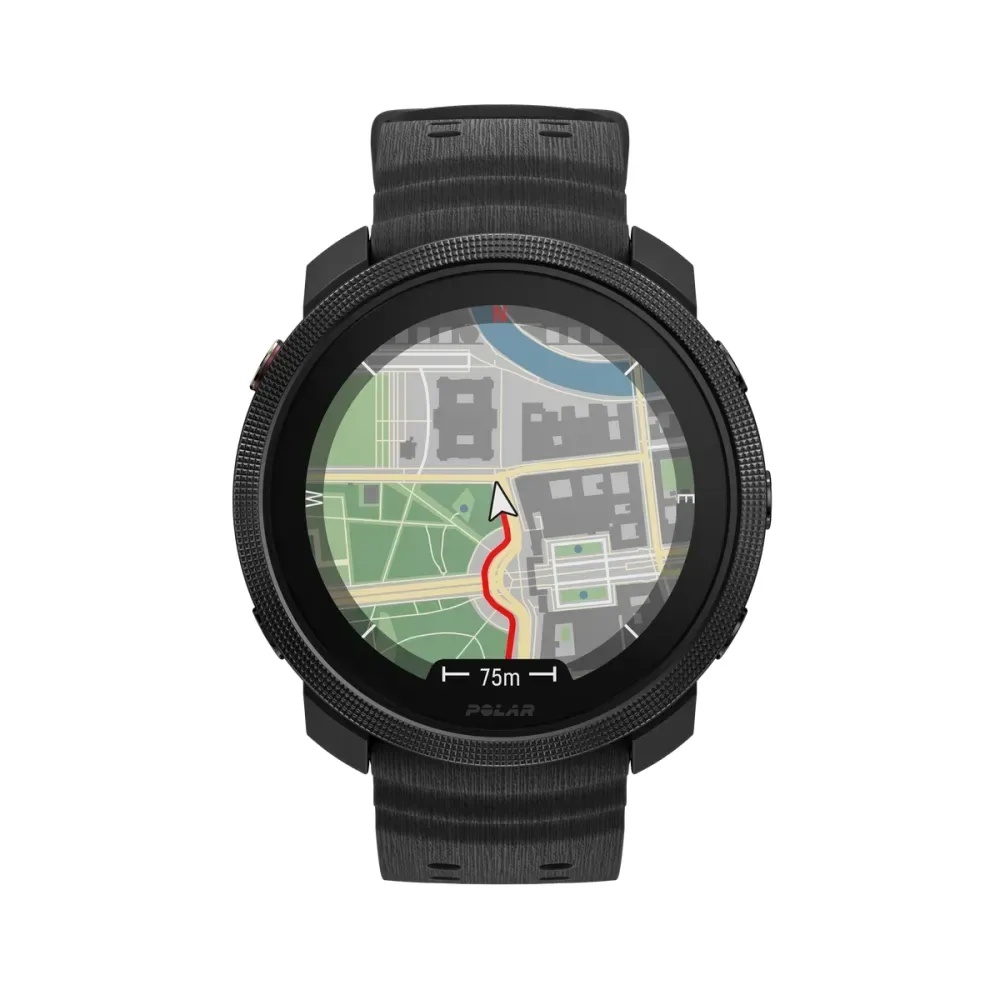
Polar Vantage M3 smartwatch
Polar~$500

Polar Vantage M3

Multisport · Polar

iPhone and AndroidPaid tier: Polar Fitness Program
  • 53 g with strap
  • Topo maps
  • 27 h dual-freq GPS

Best for: Multisport athletes with smaller wrists who want maps and Polar's sensor set for less

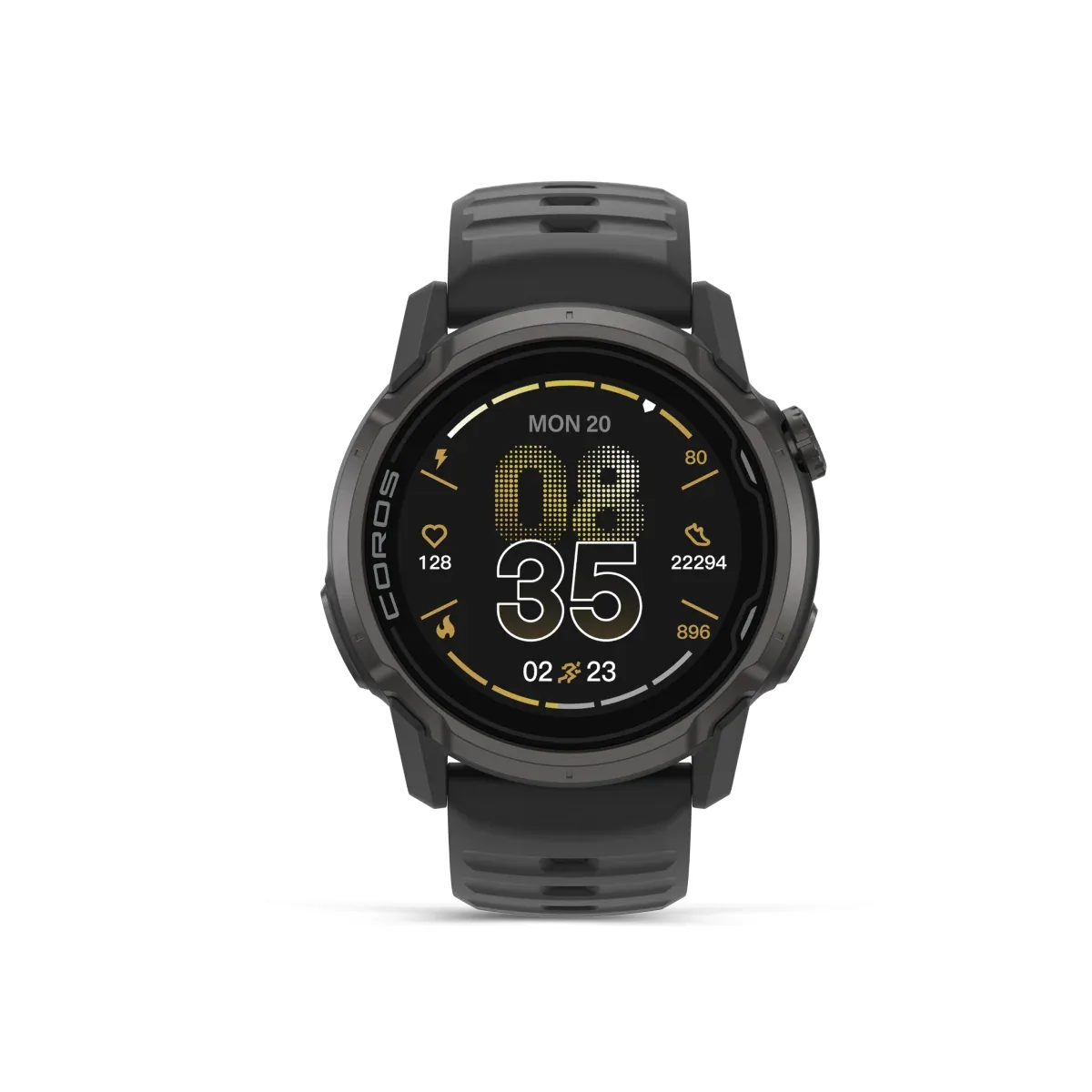
COROS APEX 4 smartwatch
COROS~$429

COROS APEX 4

Multisport · COROS

iPhone and Android
  • Up to 65 h GPS (46 mm)
  • Topo maps
  • Two case sizes

Best for: Trail runners and mountain athletes who want maps and a sunlight-readable screen in a smaller case

More from Suunto →

← Back to the catalog