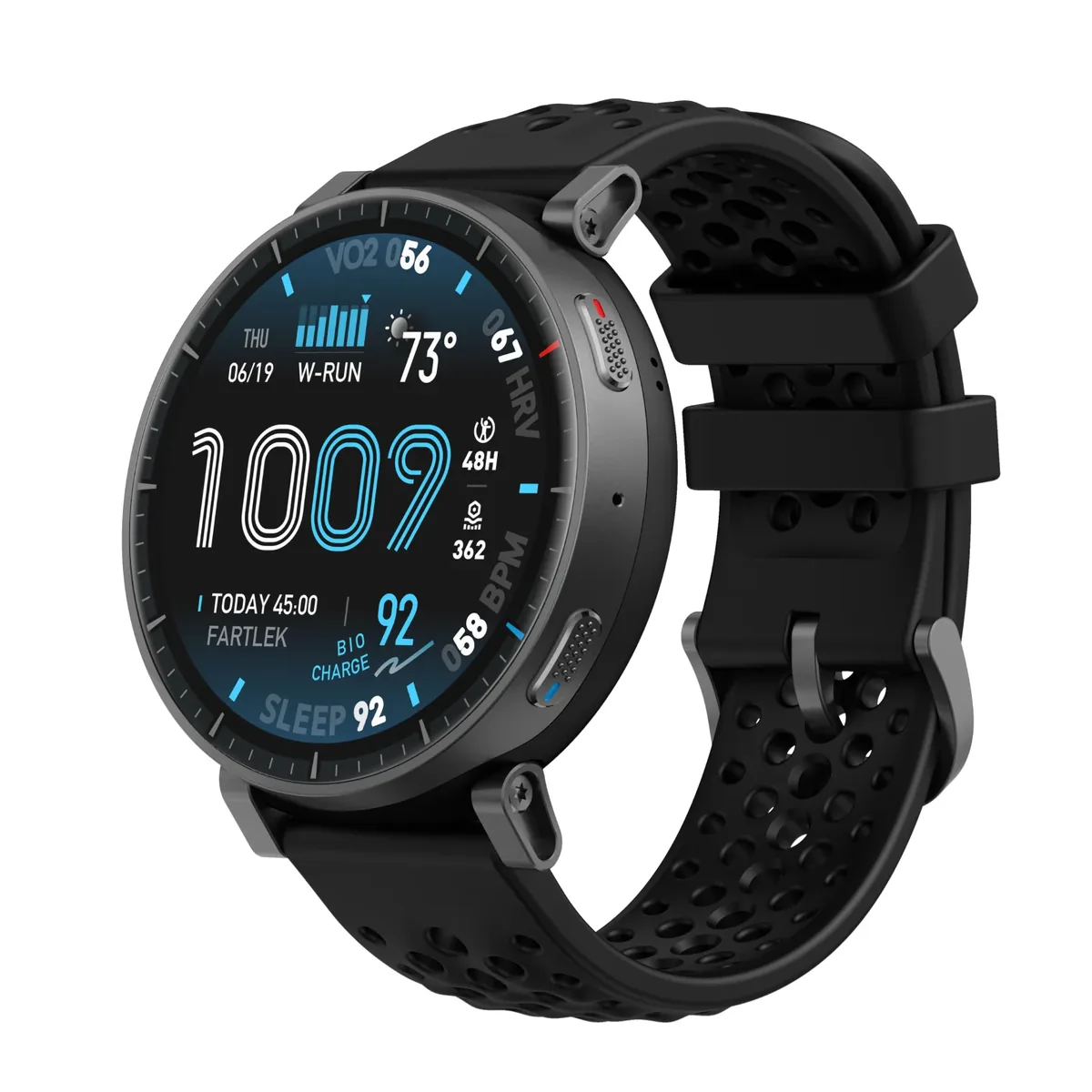
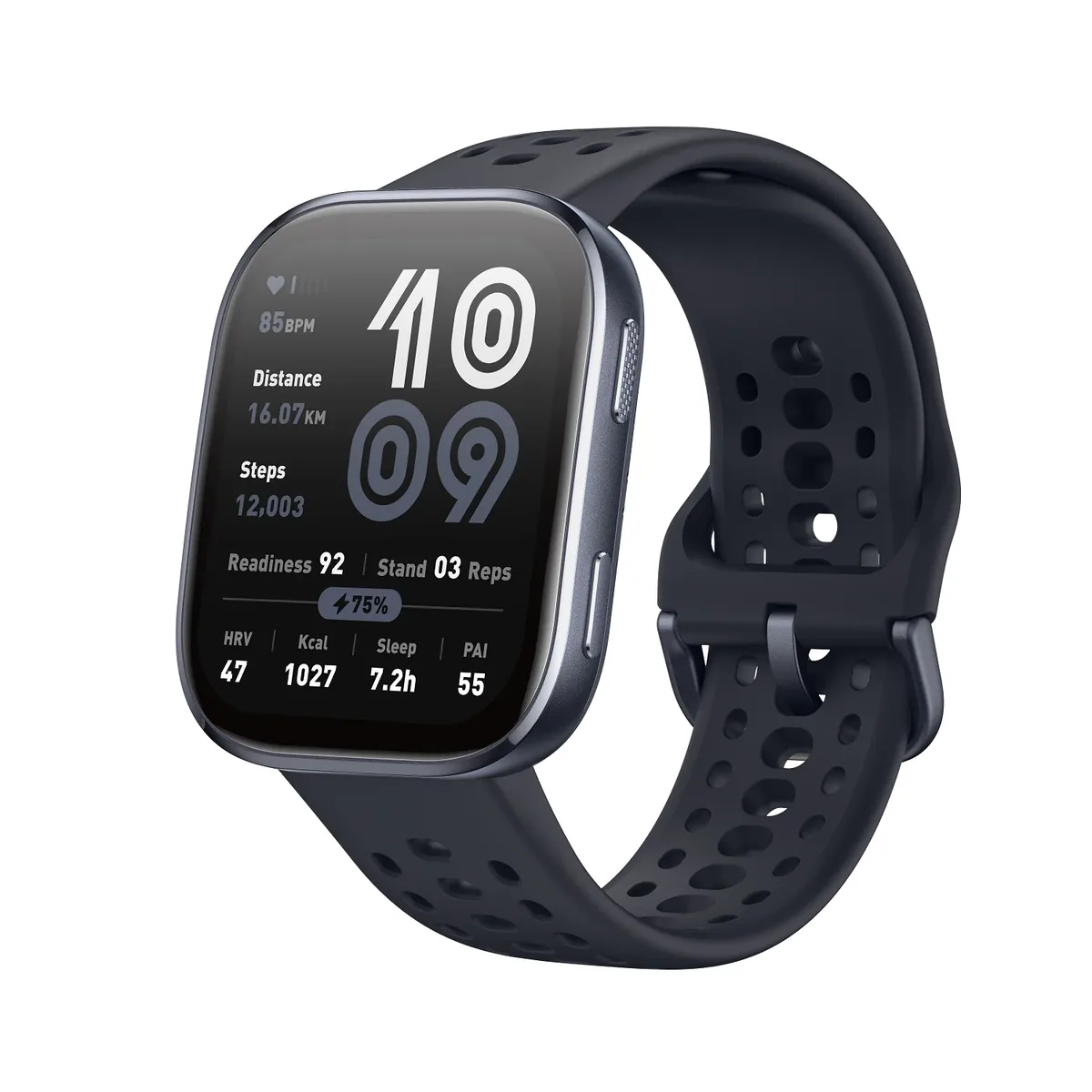
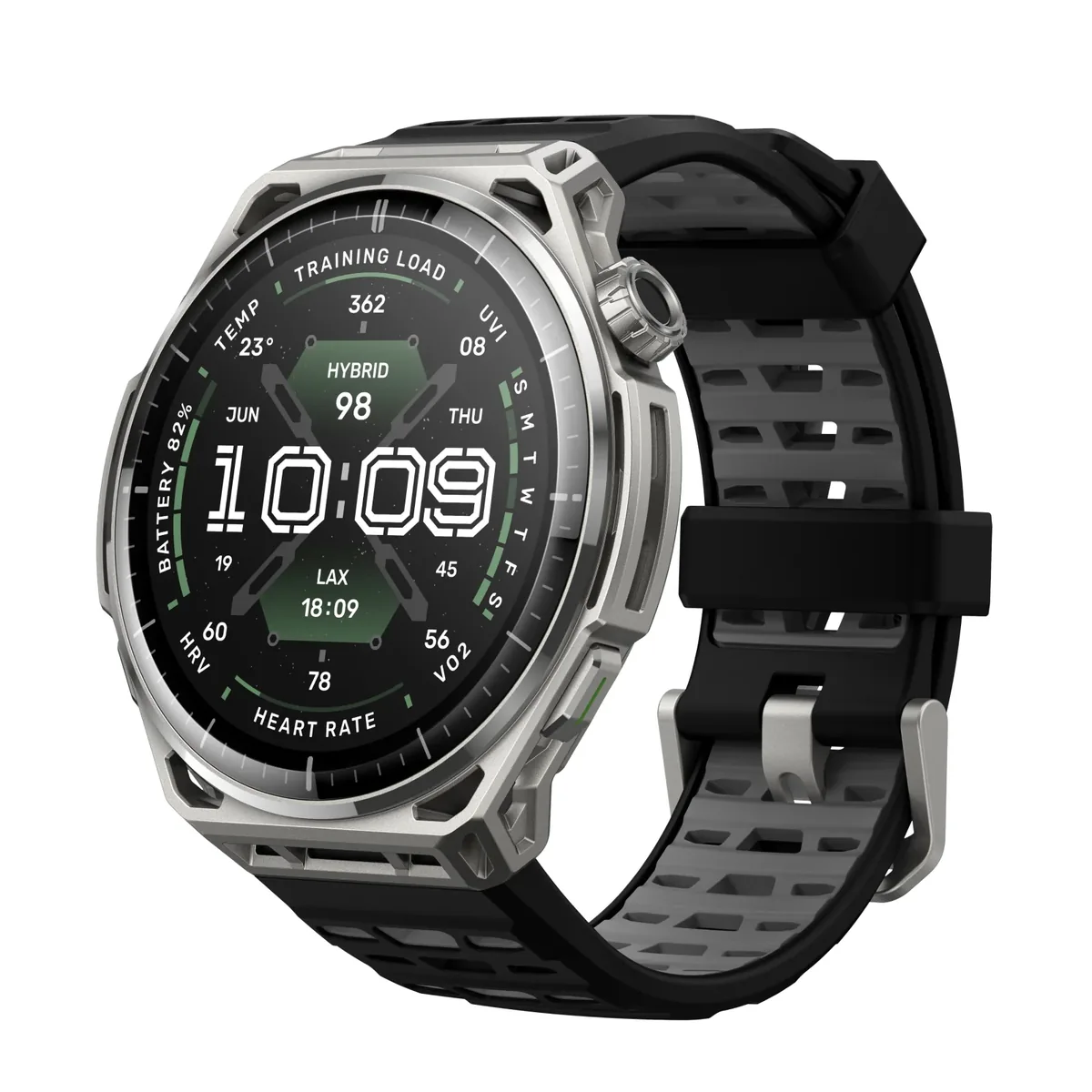
Amazfit Active Max
Fitness · Zepp OS
- smartwatch mode
- 25 days
- always-on display
- 10 days
- GPS workout
- 64 h
- 25-day battery
- 64 h GPS
- Contour maps
Best for: Buyers who want the most battery and screen per dollar and do not need dual-band GPS.
Fitness~$170Amazfit
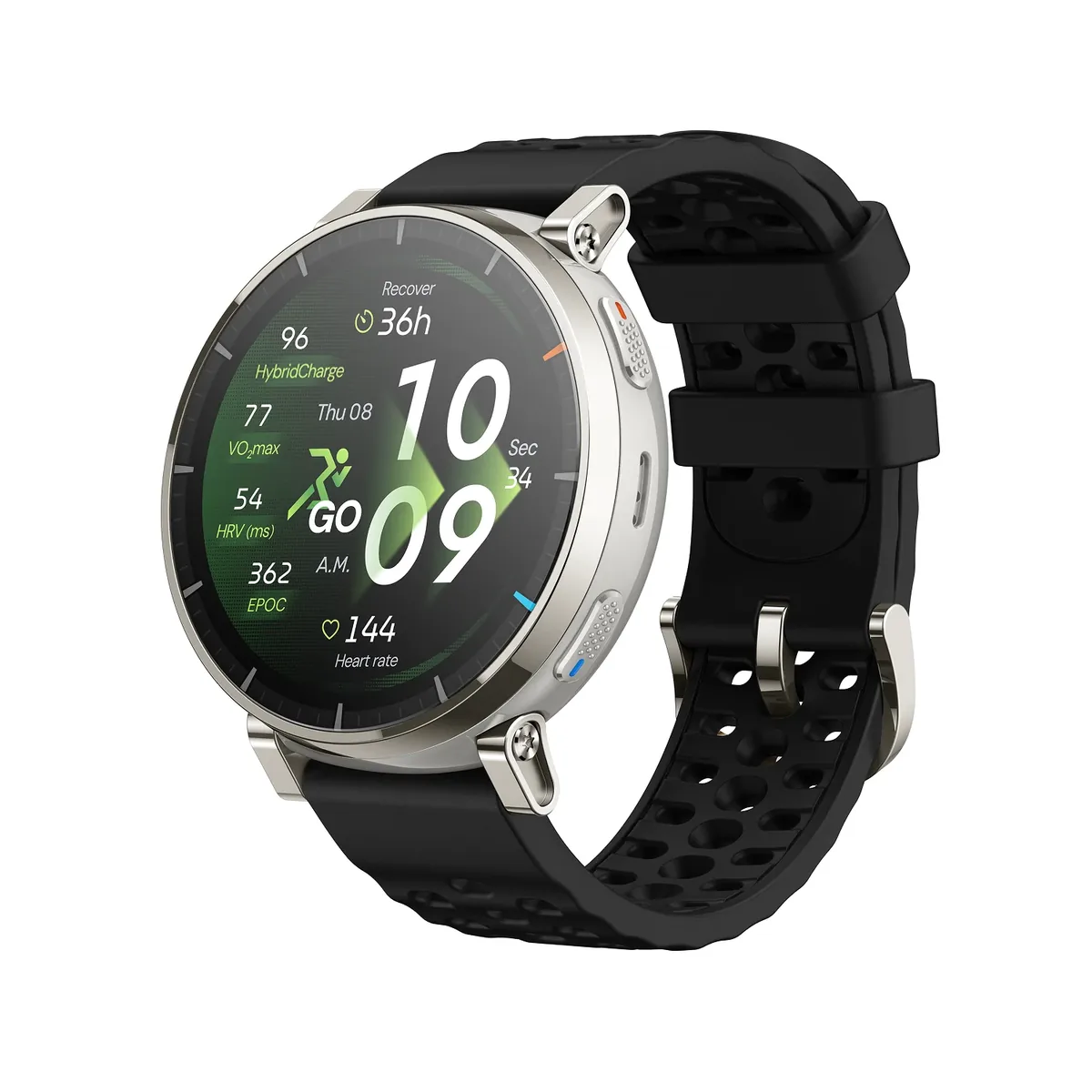
Amazfit pitches Active 3 Premium at newer runners, with a stainless steel frame, sapphire glass and a 1.32-inch AMOLED screen that reaches 3,000 nits, up from 2,000 on Active 2. Offline maps add turn-by-turn directions, POI search and auto rerouting, and music can play from the watch to Bluetooth headphones. Battery is the trade: Amazfit rates it at 12 days, against 25 for the larger Active Max at the same price.
Approx. price
~$170
maker's list price, not a live price
Best for: Beginner and mid-mileage runners who want a small, bright watch with routing for well under the price of a Forerunner.
The ring’s outer track is the headline claim; the inner two are the always-on and GPS figures as a share of it. An empty track means Amazfit does not publish that figure. Why the figures differ
Amazfit cites no regulator clearance for a health feature on this model. Its heart-rate, sleep and blood-oxygen readings are wellness features.
A clearance says what a feature is allowed to claim, not that it replaces a doctor. Cleared versus wellness features
What the extra money buys: Against the Amazfit Bip 6, the extra ~$90 buys music storage. See the Amazfit Bip 6.
The two lists above are drawn from the maker’s own pages and prices, not from owner reports. Where owner discussion has been read it appears in its own section below, so the two are never mistaken for each other.
From what 14 owners of the Amazfit Active 3 Premium reported between July and August 2026. Earlier generations are not counted.
Active 3 Premium owners are largely newer runners and people leaving an Apple Watch or a Garmin, and the reaction is positive. It is light and comfortable enough to wear all day, it looks smart on a metal band, and one owner who checked it against a chest strap through an hour of treadmill intervals now runs without the strap.
The problems owners raise are in software. Battery life is the open question: one owner sees heavy drain with nearly everything switched off, while another reports better battery after the Zepp OS 6 update with everything switched on. Workout screens have bugs too, including blank lap fields during coached runs, confusing swim splits after the manual-rest update, and poor heart rate during weight training. Watch faces are another sticking point, with failed installs and no easy way to get the data fields some owners want.
It fits someone who wants a small, smart-looking watch for running and everyday tracking at a mid-range price. Lifters who want accurate heart rate under the bar, and anyone who wants a very specific watch face, may find it frustrating.
For running, one owner thinks so: worn next to an ECG chest strap through a 16-minute jog and an hour of treadmill intervals, it tracked closely enough that they dropped the strap. The same owner found it bad during weight training, so lifters may still want a strap or an upper-arm sensor.
Owners disagree. One got under five days with always-on display off and most health monitoring disabled, even after a factory reset. Another, after the Zepp OS 6 update, still had 42 percent on day four with every sensor and always-on display running.

Fitness · Zepp OS
Best for: Buyers who want the most battery and screen per dollar and do not need dual-band GPS.

Fitness · Zepp OS
Best for: First-time smartwatch buyers who want GPS, calls and two weeks of battery for the least money.

Fitness · Zepp OS
Best for: Gym-and-run hybrid trainers who want maps and three weeks between charges without a subscription.