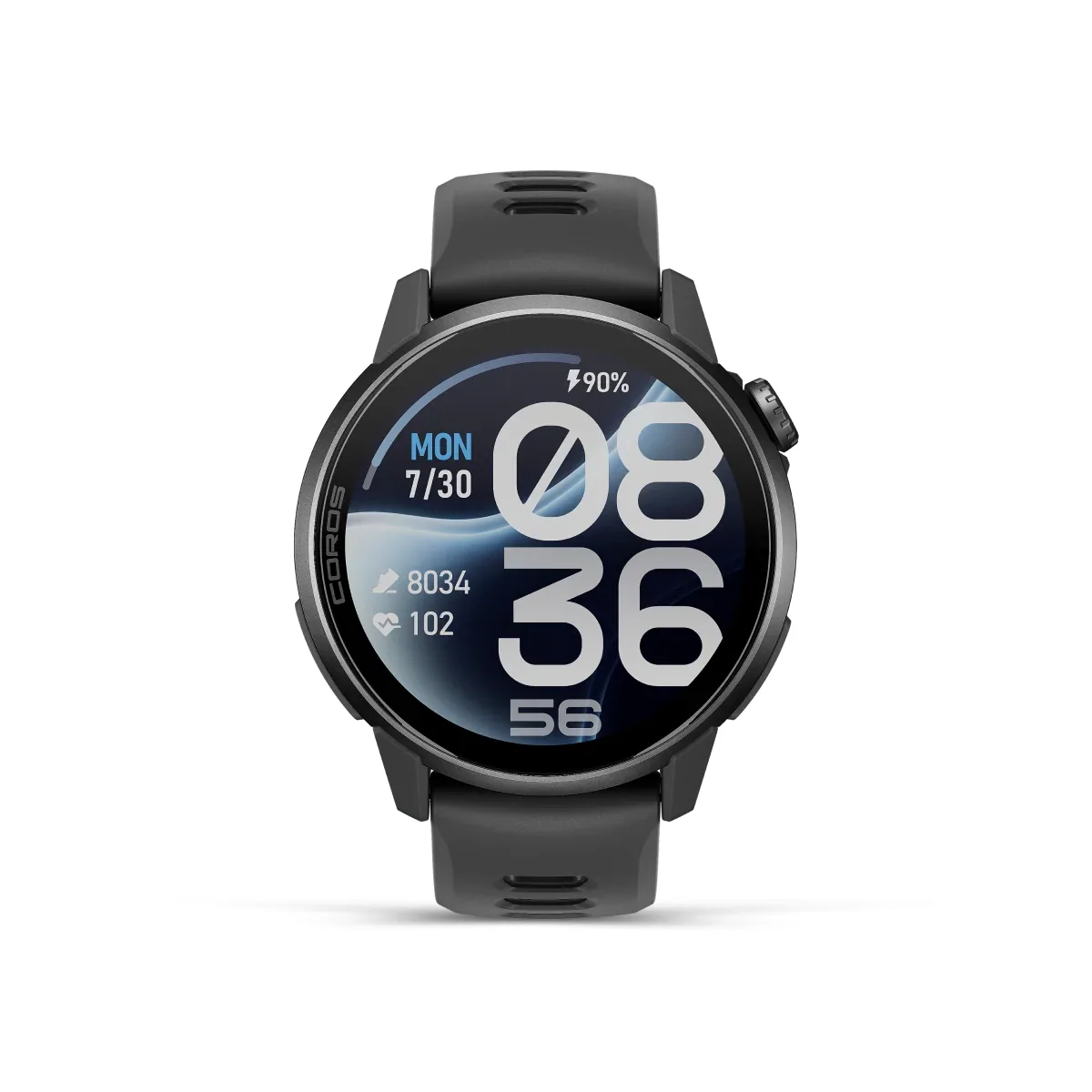
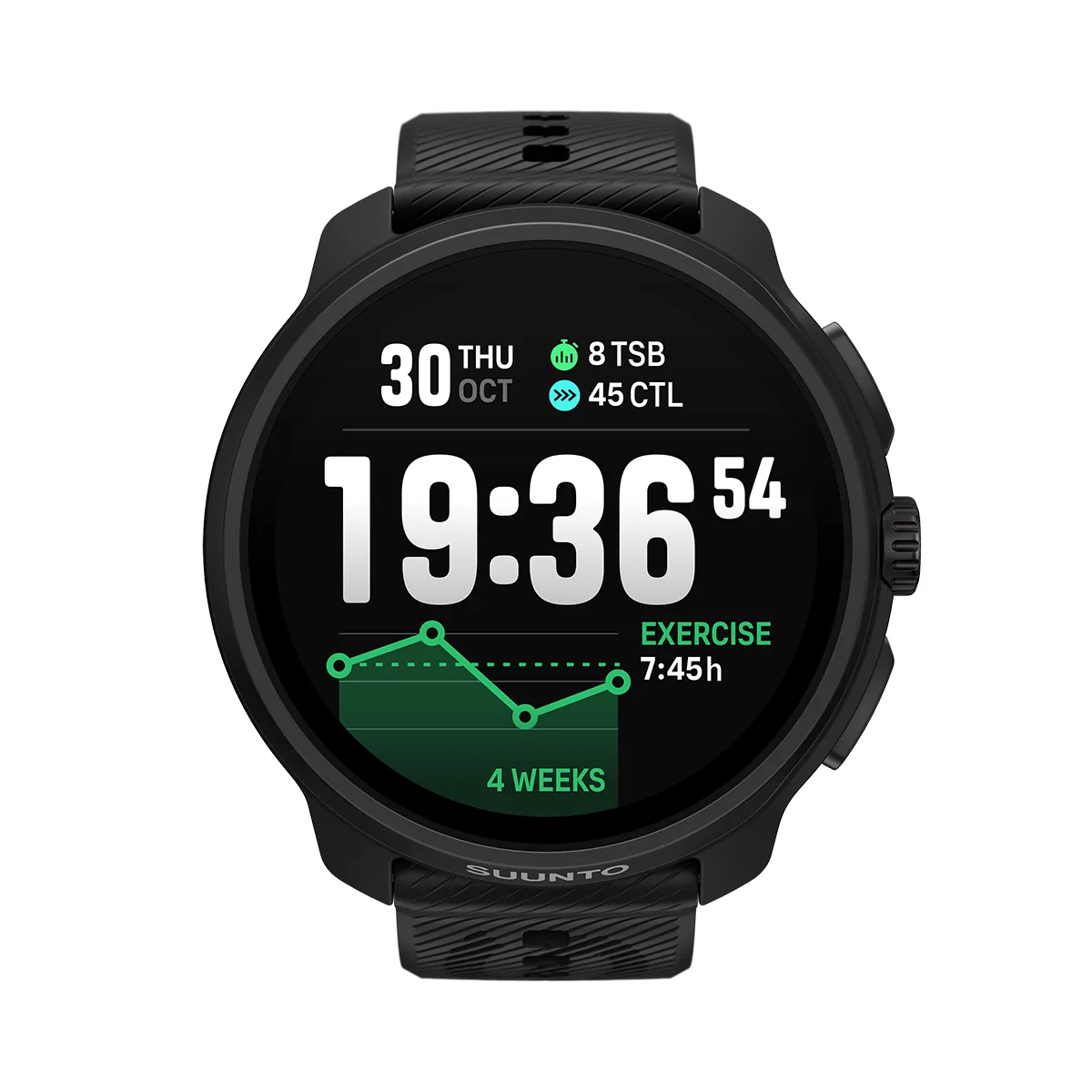
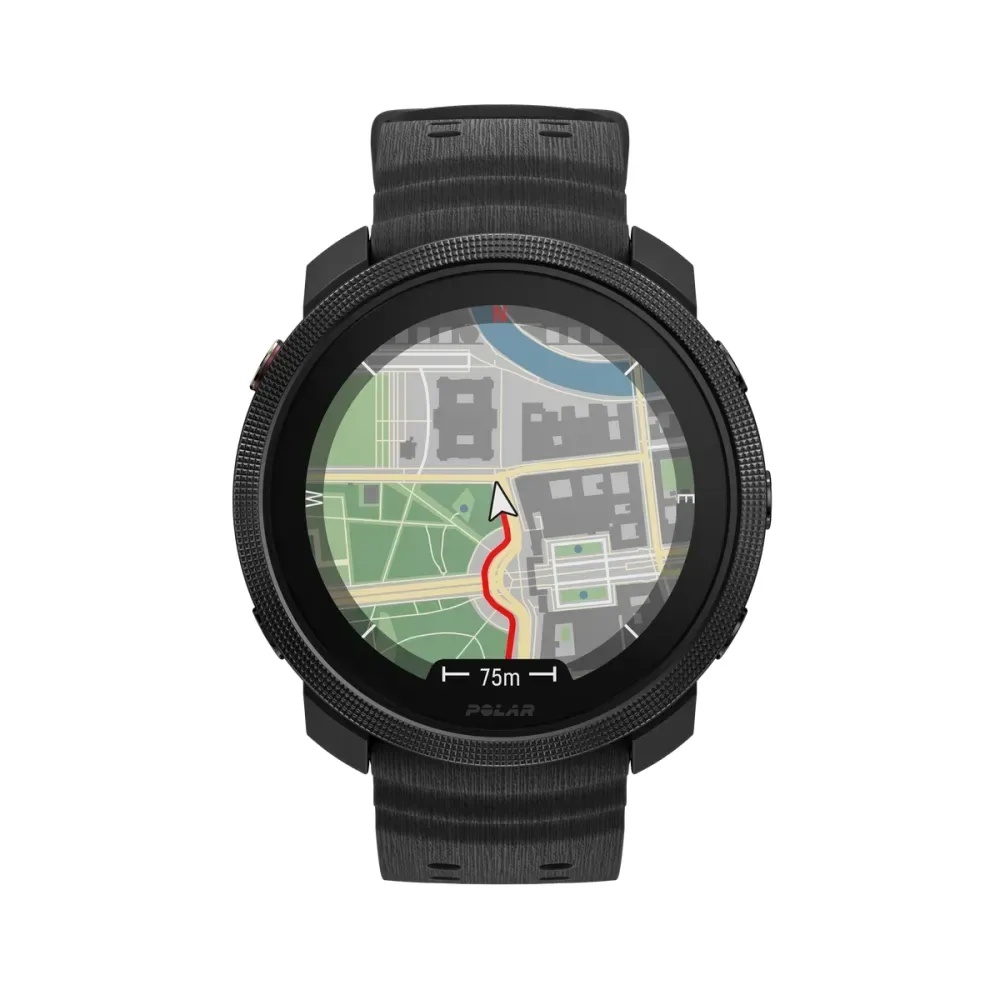
COROS PACE 4 Pro
Running · COROS
- smartwatch mode
- 21 days
- always-on display
- 7 days
- GPS workout
- 60 h
- 60 h GPS
- 21-day battery
- Topo maps
Best for: Runners and triathletes who want an AMOLED screen without giving up multi-week battery life
Multisport~$429COROS
COROS aims APEX 4 at trail running, climbing and ski touring, with a titanium bezel, sapphire glass and reinforced lugs. It comes in 42 mm and 46 mm, and the two differ widely in battery life: the 46 mm reaches 65 hours in COROS's Endurance mode against 41 hours for the 42 mm. Unlike the AMOLED PACE 4 models it uses a third-generation MIP screen, and it adds a dual-range barometer and a speaker.
Approx. price
~$429
maker's list price, not a live price
Best for: Trail runners and mountain athletes who want maps and a sunlight-readable screen in a smaller case
The ring’s outer track is the headline claim; the inner two are the always-on and GPS figures as a share of it. An empty track means COROS does not publish that figure. Why the figures differ
COROS cites no regulator clearance for a health feature on this model. Its heart-rate, sleep and blood-oxygen readings are wellness features.
A clearance says what a feature is allowed to claim, not that it replaces a doctor. Cleared versus wellness features
The two lists above are drawn from the maker’s own pages and prices, not from owner reports. Where owner discussion has been read it appears in its own section below, so the two are never mistaken for each other.
From what 27 owners of the COROS APEX 4 reported between July and September 2026. Earlier generations are not counted.
What owners praise about the APEX 4 comes down to the maps and the app. People switching from Garmin describe maps that pan and zoom without stutter, a phone app they find far easier to read, and an always-on screen they can check without raising a wrist. Some bought it specifically because they wanted MIP rather than AMOLED.
The screen is also where the complaints start. Owners find it dim in shade, under tree cover and in the evening unless night mode is on, and the ones who compared it with a NOMAD thought the sapphire version slightly less clear. Software is the other sore spot: Wi-Fi firmware downloads have stalled, and recent updates broke shoe tracking, touch editing in strength workouts and the layout of data fields for some owners. Wrist heart rate gets mixed reports, from a close match to a chest strap to cadence lock and odd spikes on walks.
Owners who stay with it tend to be trail runners and hikers who rate the maps and the comfort for all-day wear above polish. If you plan to rely on wrist heart rate or want a bright screen in low light, the reports here are worth weighing.
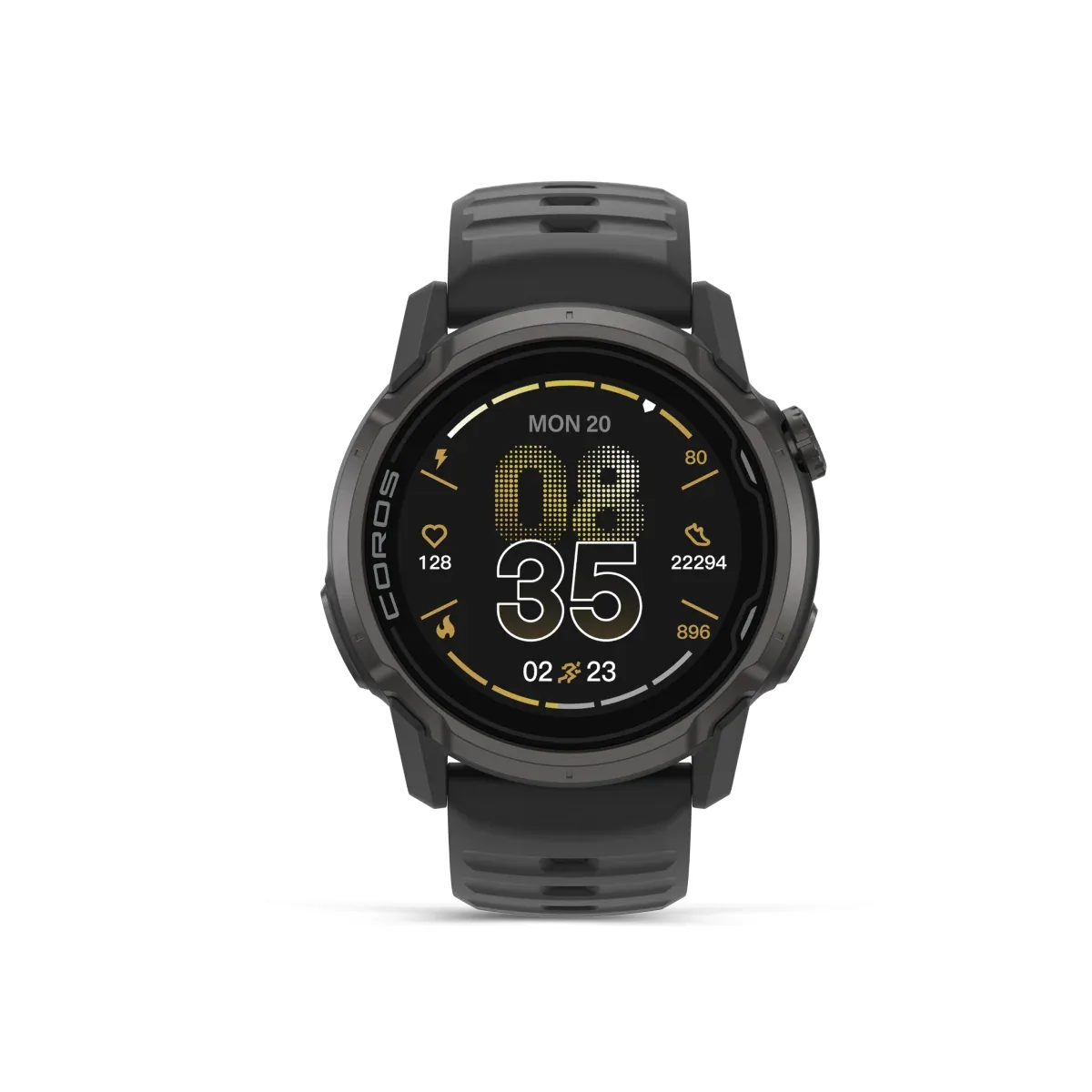
The COROS app is meant to write to Apple Health, but two owners setting up an APEX 4 on an iPhone in late August could not get it working: one never saw a permission request, and the other found COROS missing from the Health app's list. Check Health's app list after pairing rather than assuming it is connected.
One owner measured the 42 mm at about 15 mm with calipers, including the sensor, but says the sensor sits into the skin so it wears more like 13 to 14 mm, and it stopped bothering them within a week. Owners of the 46 mm describe it as light for its size.
Owners find it dim in shade, under trees and at dusk, and one asked for a manual night mode for exactly that reason. Another found it hard to read in the evening until they turned night mode on, after which it was bright enough for a night run.

Running · COROS
Best for: Runners and triathletes who want an AMOLED screen without giving up multi-week battery life

Multisport · Suunto
Best for: Triathletes and trail runners who want a large AMOLED screen and multi-day GPS battery

Multisport · Polar
Best for: Multisport athletes with smaller wrists who want maps and Polar's sensor set for less